
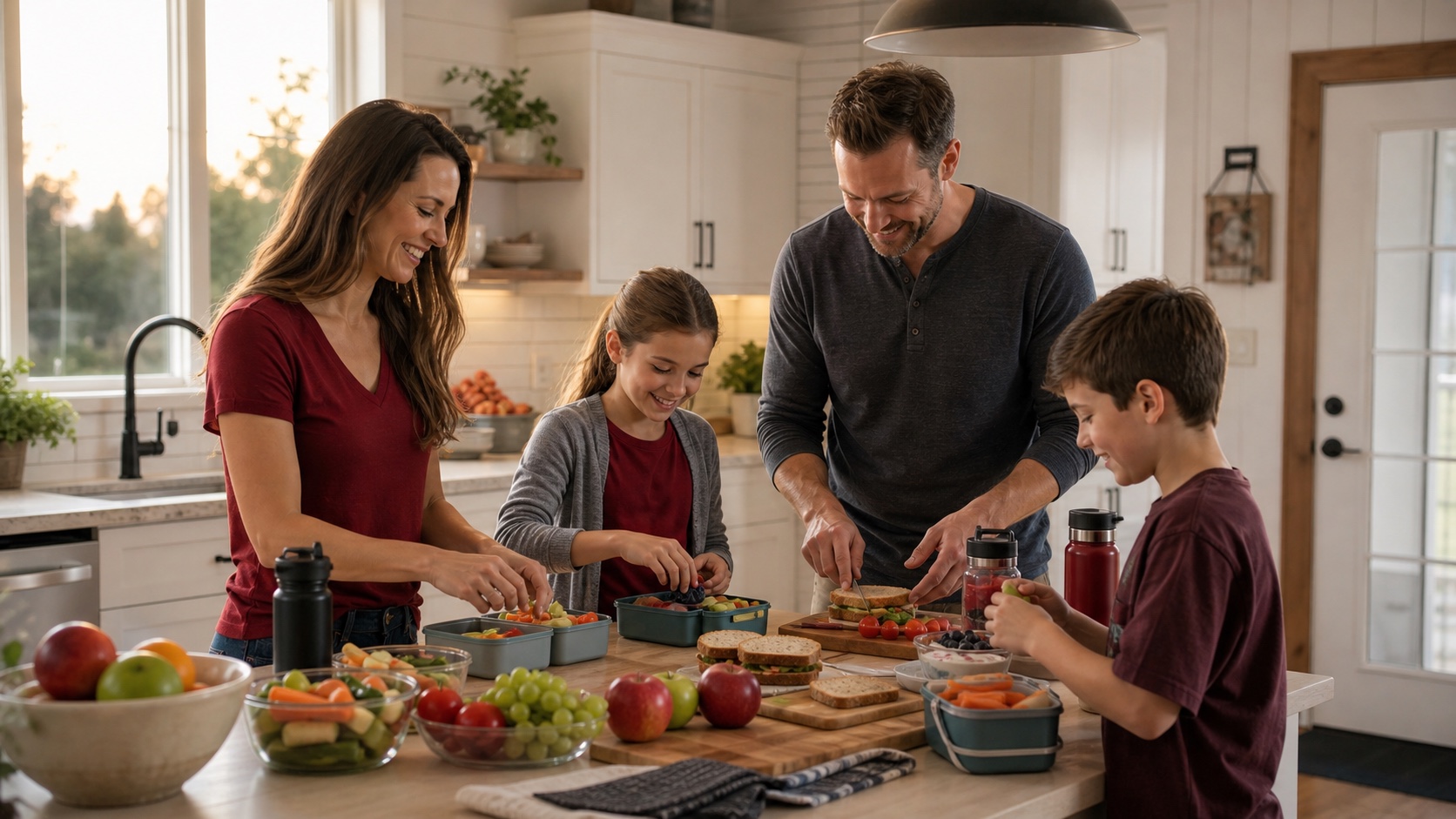
A realistic approach to breakfasts, snacks, dinners, and the days when plans change.
Once school starts, feeding a family can suddenly feel like a logistical challenge.
Breakfast has to happen quickly. Lunches need packed. Kids come home hungry. Someone has practice at 5:30. Someone else needs picked up at 6:00.
And then comes the familiar question:
What's for dinner?
Healthy eating during a busy season isn't about creating picture-perfect meals. It's about having enough structure that nutritious choices are available when everyone is tired, hungry, and short on time.
Think in Building Blocks
Instead of worrying about whether every meal is perfectly balanced, think about a few basic components.
For most meals and snacks, try combining some of the following:
- A source of protein
- Fruit and/or vegetables
- A carbohydrate or whole grain
- A source of healthy fat
For example, breakfast could be Greek yogurt, berries, and granola.
Lunch could be a turkey sandwich, cucumbers, fruit, and cheese.
A snack could be an apple with peanut butter.
Dinner could be chicken, rice, and roasted vegetables.
Nothing complicated is required.
Don't Underestimate Breakfast
School mornings are busy, and breakfast is often the first thing sacrificed when everyone is running behind.
Having a few grab-and-go options can help.
Try keeping foods such as yogurt, fruit, hard-boiled eggs, overnight oats, whole-grain toast, nut butter, or pre-made breakfast sandwiches available.
And remember: breakfast doesn't have to look like traditional breakfast food.
Leftovers can be breakfast. A turkey sandwich can be breakfast. Cheese, crackers, and fruit can be breakfast.
The goal is simply to give the body some fuel for the morning ahead.
Have a Plan for the After-School Hunger
Many kids walk through the door after school absolutely starving.
Planning for that hunger can prevent constant grazing until dinner.
Rather than offering a snack that contains primarily carbohydrates, pair foods together so the snack is more satisfying.
For example:
- Apple + peanut butter
- Crackers + cheese
- Yogurt + berries
- Vegetables + hummus
- Banana + nut or seed butter
- Turkey + crackers
For older children involved in sports, the after-school snack can also become important fuel for practice.
Use Convenience Foods Strategically
There is no prize for chopping every vegetable yourself.
Frozen vegetables, bagged salads, microwaveable grains, canned beans, rotisserie chicken, pre-cut fruit, and other convenience foods can make it much easier to put a nutritious meal together quickly.
A 15-minute dinner made with convenient ingredients is still dinner.
If spending a little more on pre-cut vegetables means you actually eat the vegetables, that convenience may be worthwhile.
Create an Emergency Dinner List
Every family needs meals for the nights when the original plan falls apart.
Keep ingredients available for three or four meals you can prepare in about 10-15 minutes.
Examples might include:
- Taco night: tortillas, beans or pre-cooked meat, cheese, salsa, and vegetables.
- Quick pasta: pasta, jarred sauce, frozen vegetables, and ground meat or meatballs.
- Snack plate dinner: cheese, turkey, hummus, crackers, vegetables, and fruit.
- Breakfast for dinner: eggs, whole-grain toast, and fruit.
These meals aren't backup failures.
They're part of the plan.
Remember the Big Picture
One meal doesn't determine your family's health.
Neither does one busy week.
Nutrition is built through patterns over time.
There will be nights when dinner is homemade and colorful. There will also be nights when dinner comes from a drive-through on the way to practice.
Both can exist within a healthy lifestyle.
Instead of asking, “Did we eat perfectly today?” try asking:
What could we add that would help nourish us?
Maybe it's adding fruit to breakfast.
Maybe it's putting vegetables alongside pizza.
Maybe it's bringing water bottles instead of buying another sugary drink.
Small additions can make healthy eating feel much more achievable - especially during a busy school year.
Dedicated To Your Success,
TBS Team
Contact us or follow us on social media for the latest updates, resources, and deals.
This article is for general education and does not replace individualized medical advice. Talk with a qualified healthcare professional about symptoms, diagnoses, or treatment decisions.

